cleaning your dog's paws after the beach or a trail.
Between-grooms know-how from scruffyboy
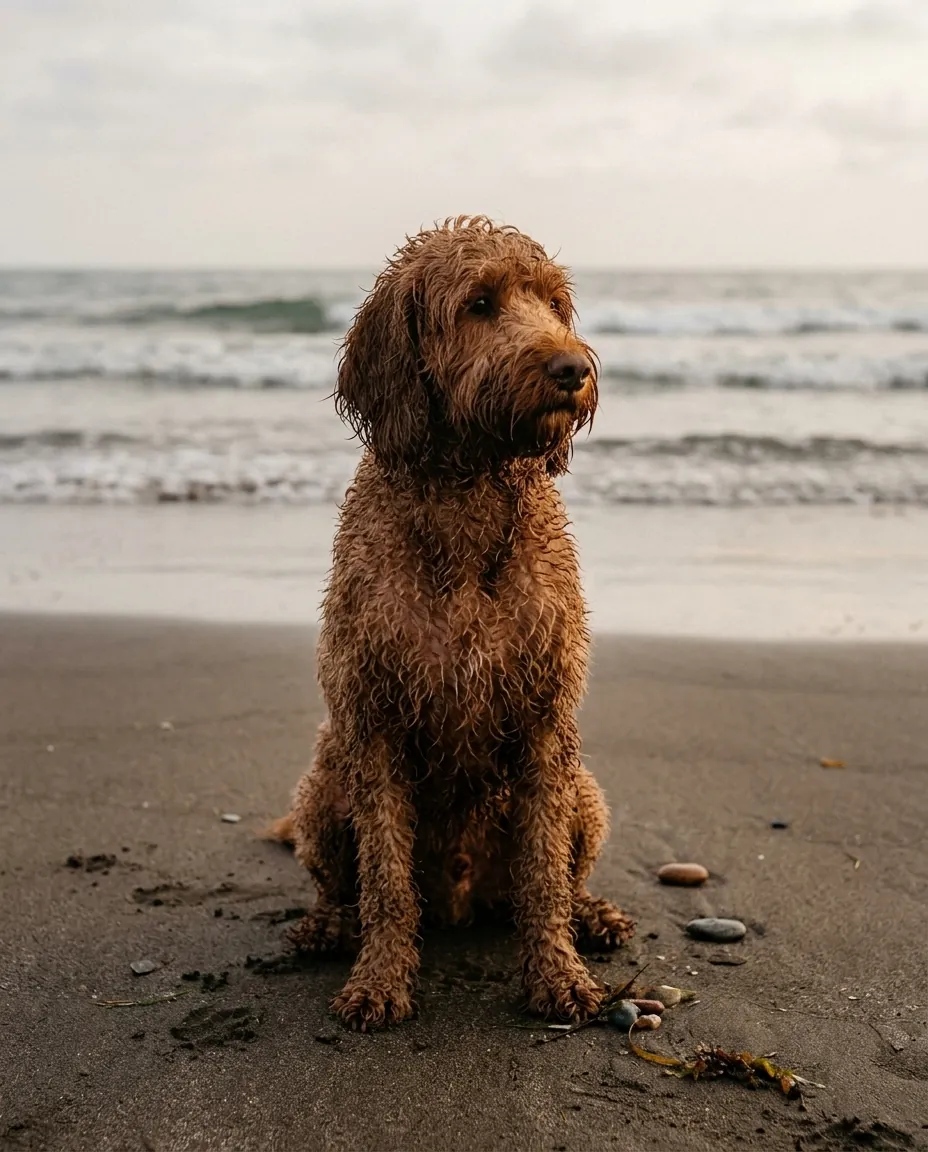
Every guide to dog-friendly beaches and trails stops at the good bit: where to go, what's off-leash, which sand allows dogs. Almost none of them tell you what to do with the animal afterwards, when he's caked to the elbow, packed with sand, and eyeing your car's back seat. This is that missing half.
The paws are the priority. The mud is the least of it: they're the part he licks, and the part that walks the beach into your flat.
why the paws matter more than the rest
Two reasons. First, salt and sand irritate. Sea salt left to dry on skin is drying and itchy, and fine sand works into the gaps between the pads and toes where it rubs with every step. A dog's answer to both is to lick, and constant licking keeps the paw wet, which in a humid climate is its own problem. Second, the paws are the delivery system. Whatever's on them ends up on your floor, your sofa and your car. Clean the paws well and you've solved most of the mess before it's a mess.
the quick method (no tub required)
1. knock off the loose stuff first
Before anything wet, get the dry sand and grit off: a firm brush-down or a shake, ideally before he's back in the car. Wetting sand before you've removed the bulk of it just turns it into a paste that's harder to shift.
2. clean between the toes, not just the pads
This is the bit people skip. Spread each paw gently and clean between the toes and around the base of the pads, where sand and salt actually lodge. A rinse-free wipe or a little waterless foam does this without a full soak. You're lifting the grit and the salt off the skin, not giving him a bath. Do all four; the back paws collect just as much.
3. check for the things sand hides
While you've got the paw in hand, look for what the mess was covering: a cut pad, a cracked nail, a grass seed or bit of shell wedged in a toe gap, or redness between the pads. Beaches and trails are hard on paws, and a two-second check now saves a limping dog tomorrow.
4. dry between the toes
Damp toe-gaps are where irritation and, in humidity, yeast get started. Press a towel between each set of toes after cleaning, the same squeeze-don't-rub idea in drying a dog in humid weather. Dry paws, no licking, no lingering funk.
then deal with the rest of him
Paws done, the coat is usually the easy part: a wipe-down of the belly and legs where the salt spray and wet sand settle, and a quick going-over anywhere that's still gritty. A full bath after every beach trip is overkill. It strips the coat and, in this weather, leaves you with the hard job of getting a thick coat fully dry. For the everyday salt-and-sand, a waterless clean is faster, kinder to the coat, and doesn't turn a nice afternoon into an evening of bathroom wrestling. Save the real bath for the days he finds something genuinely unspeakable.
a note on the coast and the trail
Coastal walks bring salt spray and fine sand; forest and mountain trails bring mud and stream water; most good days out bring some of each. The method's the same either way (paws first, coat second, dry the gaps), but keep a kit in the car, because the gap between "great walk" and "filthy dog on the back seat" is about ninety seconds of cleanup you'll be glad you could do on the spot.
scruffyboy makes quick-clean grooming goods for exactly this: the mess between grooms, tested on one very sandy dog. Join the list for first dibs at launch.
grooming goods for dirty dogs.
Quick-clean products for the stretch between grooms, in final testing now, launching autumn 2026. The first 500 on the list get founder pricing.
get first dibs