how to dry a dog in humid weather.
Between-grooms know-how from scruffyboy · Hong Kong
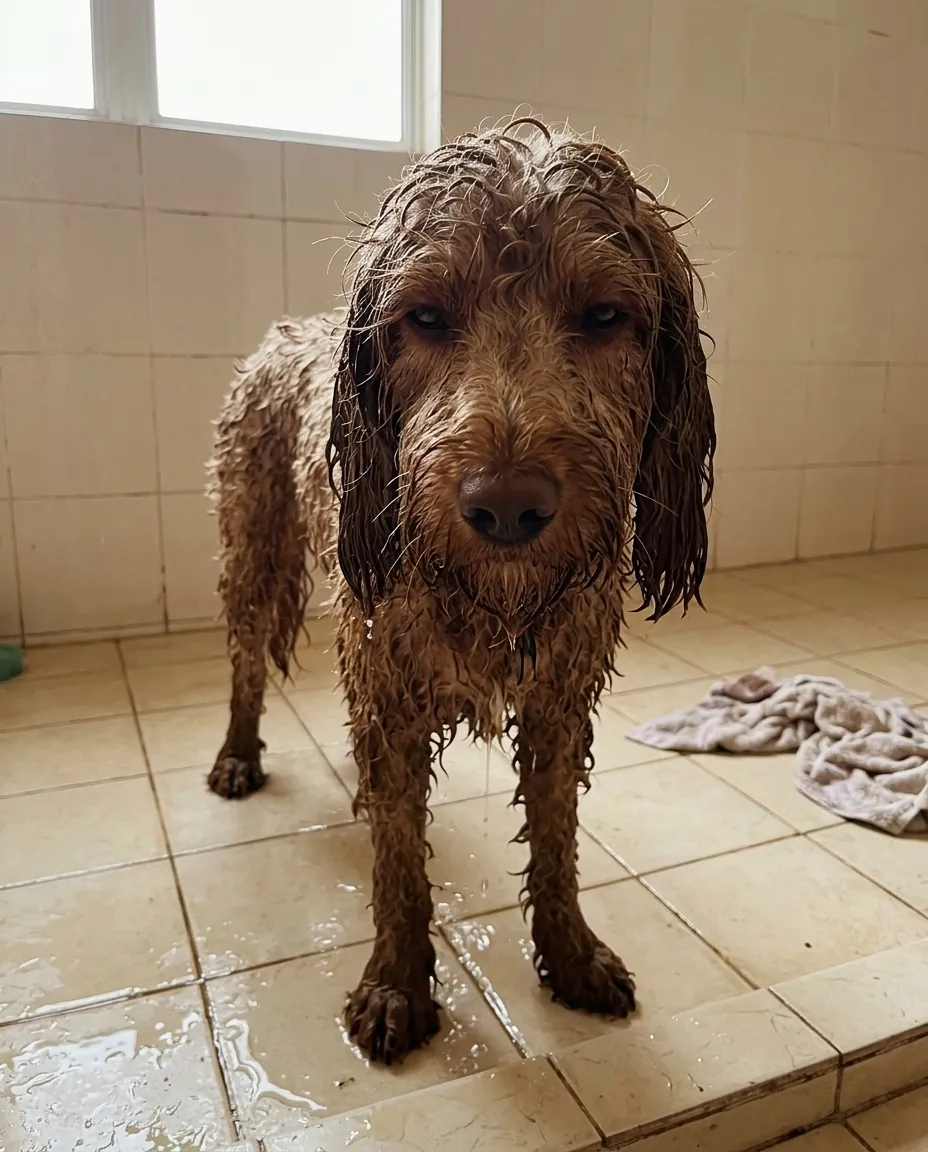
In a dry climate a dog shakes off, sits in the sun for twenty minutes, and it's done. In a humid one — Hong Kong from about May to September, most of Southeast Asia, a British summer that can't commit — the coat never actually finishes drying. It stays faintly damp at the skin for hours. And a coat that stays damp at the skin is where the smell starts, where the itch starts, and where hot spots and yeast get comfortable.
Drying a dog properly in humidity isn't about more towels. It's about getting the water out of the undercoat before the air gives up trying. Here's how.
why humidity is the actual problem
A dog's coat dries by evaporation, and evaporation needs dry air to move the water into. When the air is already 85% water, there's nowhere for the moisture to go — so a curly or double coat can sit damp against the skin long after the top looks dry to you. That warm, damp, dark layer next to the skin is close to a perfect culture dish. It's the single most common reason a freshly-washed dog smells "off" within a day in a humid place.
Which means the goal isn't "looks dry." It's "dry at the skin, especially in the folds."
the method, step by step
1. let him shake first
Before you touch a towel, let him shake — outside, or in the bath. A shake removes up to about half the surface water on its own, and it costs you nothing but standing back. If he needs a prompt, a light blow on the ear usually triggers it.
2. squeeze, don't rub
Rubbing a towel back and forth feels productive and does two unhelpful things: it wrecks the coat into tangles, and it mostly moves water around rather than lifting it out. Instead, press and squeeze — wrap a section of coat in the towel and gently compress it, like you're wringing a sponge you can't twist. A thirsty microfibre towel pulls far more water this way than a bath towel does by rubbing. Work in sections: legs, chest, belly, back, tail.
3. go after the hidden wet spots
These are the bits people miss, and they're exactly where trouble starts because air reaches them last:
- Armpits and groin — skin folds that trap moisture against warm skin.
- Behind and inside the ears — a damp ear canal in humidity is the classic ear-infection setup. Dry the flap and the opening; never push anything deep in.
- Between the toes and pads — grass, sand and damp all collect here, and a dog licks it, which keeps it wet.
- The base of the tail and the belly line — low, shaded, slow to dry.
4. move air across him
This is the step that actually beats humidity. Once you've squeezed out what you can, get air moving. A fan on a low setting pointed at him while he settles does more in ten minutes than another towel does in twenty, because it replaces the saturated air sitting in the coat. A cool or low-heat dryer on a low speed works too — keep it moving, keep it off hot, and keep it a good distance from the skin. Air conditioning helps for the same reason: it's pulling water out of the room, so the coat has somewhere to send its moisture.
5. don't let him "air dry" curled up
A damp dog who goes straight to a bed or a sofa curls into a warm, unventilated ball and traps the moisture for hours — the worst possible outcome. Keep him somewhere with airflow until the undercoat feels dry to the back of your fingers, not just the tips of the hair.
the shortcut most days don't need a full bath
Here's the thing worth saying out loud: in a humid climate, the full wash-and-dry is often the thing creating the problem. Every proper bath is another coat you have to get fully dry before the funk sets in — and in this weather that's genuinely hard to do.
Most between-grooms messes — muddy paws, a salty beach coat, general dog — don't need the tub at all. A no-rinse, waterless clean gets him presentable without soaking the whole undercoat, which means there's barely anything to dry. You save the real bath for when he's earned it, and you skip the hardest part of humid-weather dog ownership entirely.
when damp is actually a vet thing
Drying technique handles the everyday. But if you're seeing a persistent musty or yeasty smell that comes back within a day of drying, red or raw patches, constant scratching or licking at one spot, or a head-shake and an ear that smells — that's past grooming and into "book the vet." Humidity makes all of these more likely; none of them are things a towel fixes.
scruffyboy makes quick-clean grooming goods for the stretch between grooms — built and tested in Hong Kong, on one very patient, very damp dog. Join the list for first dibs at launch, or read how to clean your dog's paws after the beach or a trail next.