how to get mud off a dog.
Between-grooms know-how from scruffyboy
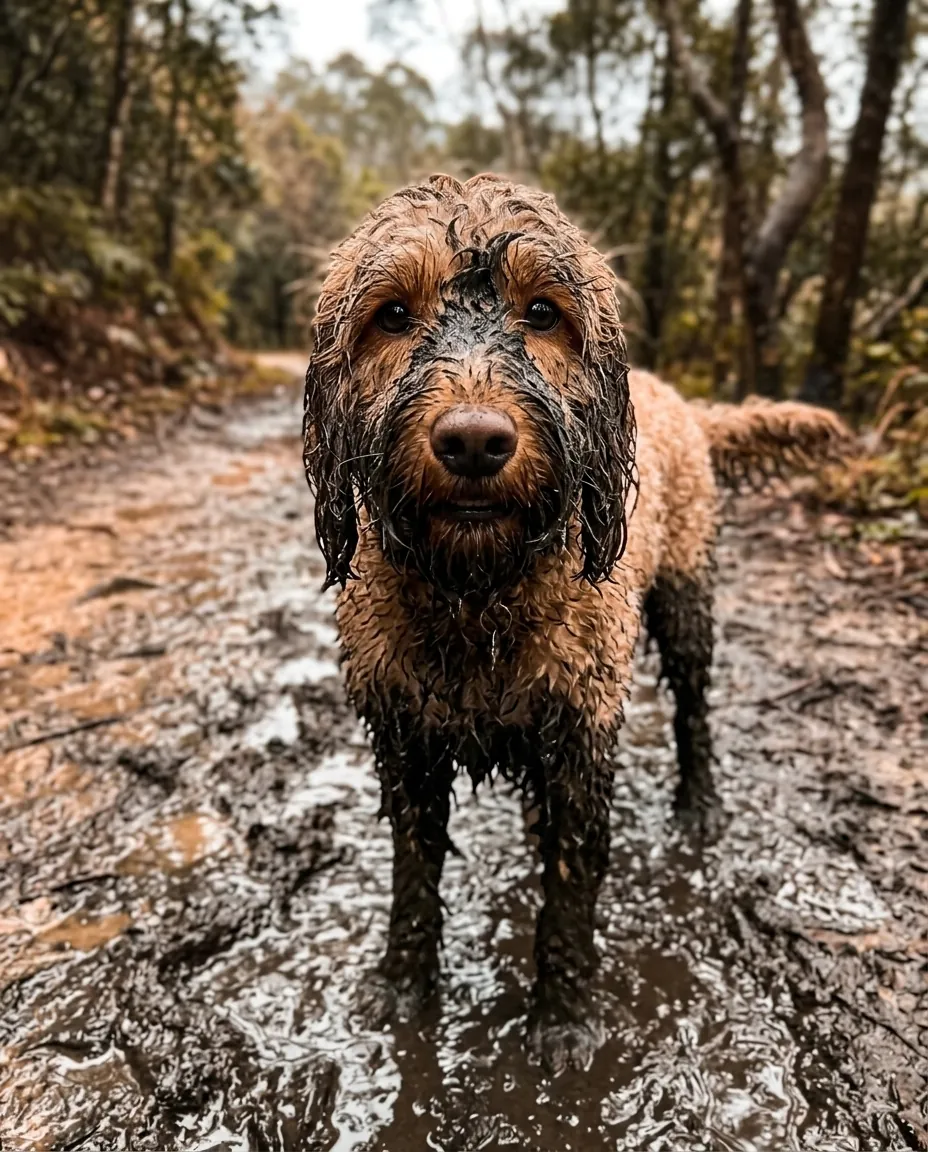
The fastest way to get mud off a dog is counterintuitive: wait. The instinct is to grab a wet cloth or hose him down the second he walks in, and that is exactly what turns a manageable mess into a smeared, grey, all-over disaster. Here is the order that actually works, and why.
the one rule: dry mud comes off, wet mud spreads
Wet mud is glue. Rub it and you push it deeper into the coat and spread it wider, and you finish with a damp dog who is somehow muddier than when he came in. Dry mud is dust. Once it hardens it goes brittle, loses its grip on the hair, and most of it will fall out with a brush and a good shake. So the single most useful thing you can do with a muddy dog is give the mud twenty minutes to dry before you touch it.
step one: contain him while it dries
The catch with waiting is that a muddy dog left loose will dry your mud into the sofa for you. Park him somewhere easy to clean: a crate, a bathroom, a utility room, or clipped to his lead by the door on an old towel. Give him something to do and let the mud go hard. If he shakes in there, all the better, that is half the job done before you have lifted a finger.
step two: knock off the dry stuff
Once it is properly dry, take him outside or over a hard floor and get the bulk off. A slicker brush or a rubber curry brush works through the coat and lifts the flakes out. Your hands do most of it too. Work with the direction of the coat, not against it, and you will be surprised how much comes away as dry grit rather than mess.
step three: spot-clean what is left
Brushing gets the loose mud but not the stuff ground into the paws, the belly, the legs and wherever he sat down. That last layer is the only part that needs damp. A cloth or a waterless foam, worked into the dirty patch and wiped back off, deals with it without committing to a full bath. The paws get their own method since the mud packs down between the pads, and the belly and legs take the same waterless wipe covered in cleaning a dog without a bath.
step four: dry the damp bits
Anywhere you have used water or foam, dry it off, especially the undercoat and between the toes. A damp coat left to its own devices is where the post-walk smell begins, and it sets in faster in warm or humid weather. A towel and two minutes now saves you a funky dog later.
when to skip all this and just bath him
Some days the mud wins. If he is caked to the skin from nose to tail, or he has found something that needs to come off properly rather than be brushed around, run the bath. That is the exception though, not the default. Reaching for a full wash every muddy walk means bathing him far too often, which causes its own problems.
the real fix: do it before he is back in the car
Most of the mud drama happens because the dog gets from a wet field into your car and your house before anyone deals with him. Keep a brush, a towel and a waterless foam in the boot, and knock the worst off at the car before he is on the seats. It is ninety seconds that saves an afternoon.
scruffyboy makes the between-walks kit for exactly this, a waterless wash and the rest of it, built for the boot of the car rather than the bathroom. Join the list for first dibs, or read the other guides.
grooming goods for dirty dogs.
Quick-clean products for the stretch between grooms, in final testing now, launching autumn 2026. The first 500 on the list get founder pricing.
get first dibs