what to look for in a dog shampoo.
Between-grooms know-how from scruffyboy
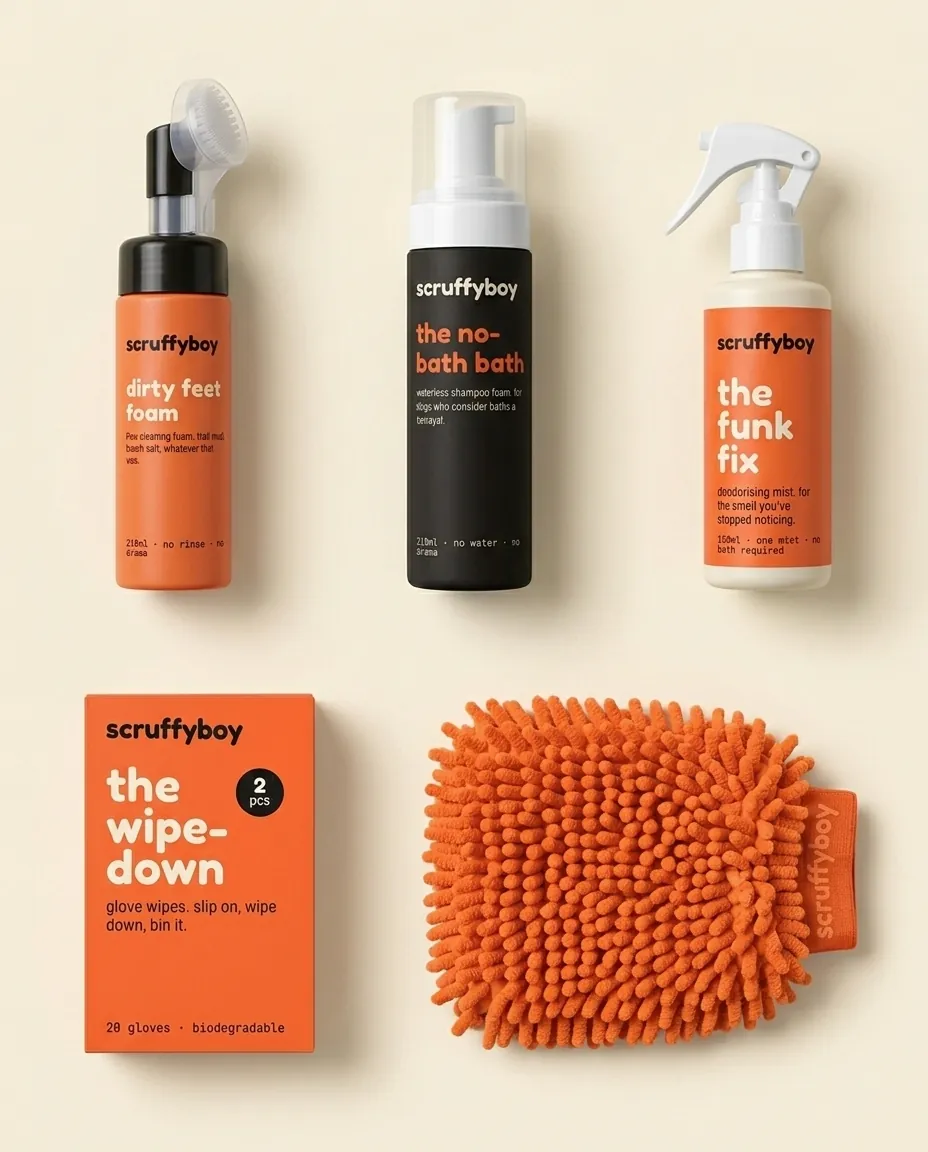
Most dog shampoo is sold on the front of the bottle: a soft photo, a scent name, a word like "natural" in a friendly font. The part that actually matters is the ingredient list on the back, and it's written to be skimmed past. This is how to read it, so you can tell a genuinely good formula from a nicely-designed one.
1. pH, the thing nobody mentions
This is the single most important difference between dog and human products, and it's almost never on the label. Dog skin sits at a more neutral pH than ours; human skin is more acidic. A shampoo built for human skin is balanced for the wrong number, and used on a dog it can disrupt the skin's protective barrier over time, leaving it dry, flaky or itchy. It's the main reason "I just used my shampoo, it's gentle" is bad advice. Look for something that states it's pH-balanced for dogs, and don't substitute human products, even the mild ones.
2. the surfactant, how it actually cleans
Surfactants are the ingredients that lift dirt and oil off the coat, and they're usually near the top of the list. The aggressive, cheap ones, sulfates like sodium lauryl sulfate (SLS), clean by stripping, and they're effective, but on sensitive or already-dry skin that stripping can irritate and leave the coat worse off. Gentler surfactants (you'll see names like coco-glucoside or decyl glucoside) clean well with less stripping. Neither is "poison", but if your dog has reactive skin, the gentler chemistry is the safer bet, and a formula that leans on it is usually a more thoughtful one.
3. fragrance and dye, for you, not the dog
That "fresh linen" scent and the colour of the liquid are there for the person buying the bottle. The dog doesn't care, and heavy artificial fragrance and dyes are among the more common triggers for a sensitive dog's skin, with zero cleaning benefit in return. A little scent isn't a crime; a formula built around a big synthetic fragrance is a formula built around the shelf, not the animal. "Fragrance" or "parfum" as a single line can also hide a long list of undisclosed components.
4. "natural", "organic", "vet-approved": read past them
On pet products these words are largely unregulated marketing. "Natural" has no agreed legal definition; "organic" on a non-food product rarely means what it means on food; "vet-approved" can mean one vet, once. None of them are proof of anything. They're not automatically dishonest, but they're a claim on the front, and the ingredient list on the back is the actual evidence. Judge the bottle by the list, not the adjectives.
what a good formula tends to look like
- pH-balanced for dogs, and honest enough to say so.
- A gentle surfactant doing the cleaning, especially for sensitive skin.
- A short, legible ingredient list, where you can tell what most of it is for.
- Minimal added fragrance and dye, and no big undisclosed "parfum" mystery.
- Soothing, well-tolerated extras where they earn their place (oatmeal, aloe, glycerin) rather than a dozen buzzwords.
and the bigger point: you often don't need shampoo at all
The best formula is still one you're using too often if you're bathing a dog every week. Over-washing, with anything, strips the coat and can make skin drier and itchier. For the everyday between-grooms mess, a waterless clean skips the whole question, and you save the real shampoo for when it's genuinely needed. If your dog has a diagnosed skin condition or a medicated wash from your vet, follow that. This is about choosing an everyday shampoo, not treating a problem.
scruffyboy is building grooming goods that are honest on the back of the bottle, not just the front, for the stretch between grooms, tested on one very patient dog. Join the list for first dibs, or read what's wrong with the pet grooming aisle next.
grooming goods for dirty dogs.
Quick-clean products for the stretch between grooms, in final testing now, launching autumn 2026. The first 500 on the list get founder pricing.
get first dibs