getting sand and salt out of the coat.
Between-grooms know-how from scruffyboy
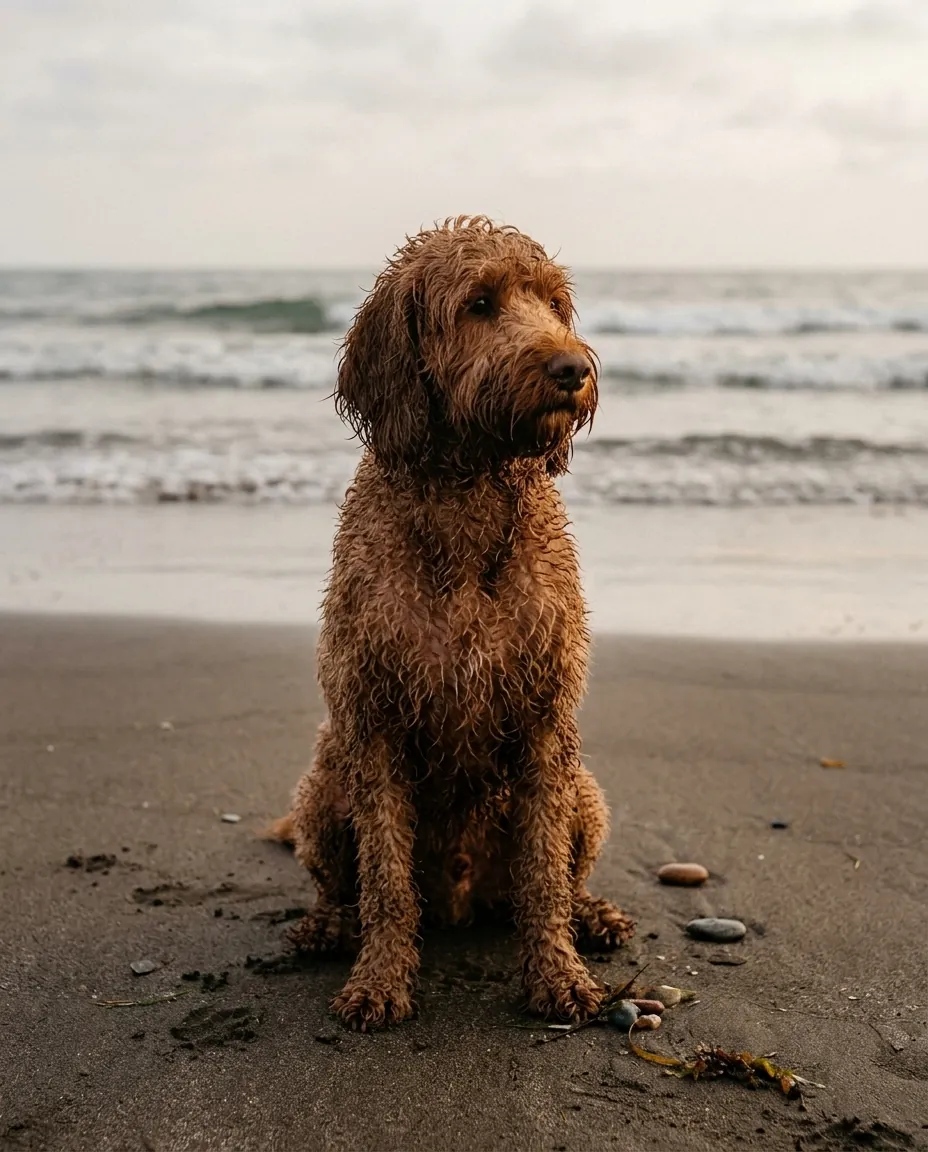
A beach day is the best day, and it sends a dog home carrying two very different problems. Sand and salt both need to come off, but they come off in opposite ways, and treating them the same is why the dog is still gritty and itchy two days later. Here is what each one does and how to deal with it.
why bother, if he seems fine
Salt water dries the skin as it evaporates, and a coat left salty gets flaky and itchy. Dogs then lick and scratch at it, which makes it worse and can start a hot spot. Sand is an abrasive: worked into a damp coat and left there, it rubs the skin raw and packs into mats, and it collects in exactly the tender spots, between the toes, under the arms, in the groin and around the ears. Neither is an emergency. Both are easy to sort at the beach or the car, and a pain to ignore.
sand: let it dry, then brush it out
Sand behaves like mud. Wet, it clings and grinds in. Dry, it turns back into loose grit that falls out on its own. So do not hose a sandy dog down first. Let the coat dry, then work it out with a brush or your hands, going with the coat rather than against it. A quick shake does a lot of the job for you. Pay attention to the paws and the soft, hidden spots where sand hides, and check between the pads, which is where it packs down hardest. The full paw method is here.
salt: this one needs water
Salt is the opposite. You cannot brush it out, because it has dried onto the hair and the skin, so it needs rinsing off. If you have access to fresh water, a quick rinse of the coat and a proper one of the paws and belly is ideal. If you do not, a thorough wipe-down with a damp cloth or a waterless wash lifts most of it. Give the paws particular attention, both because they carry the most salt and because that is what he will lick on the drive home.
don't forget the ears and the folds
Sand and salt both collect where you are not looking: inside the ears, in any skin folds, and around the collar line. A quick wipe of those spots finishes the job and heads off the itch before it starts.
then dry him off
Once the salt is rinsed and the sand is out, dry the coat, especially the undercoat and between the toes. A salty, sandy dog who then stays damp is the full set: dry skin, grit, and the beginnings of a smell. Two minutes with a towel closes it out. There is more on drying, and why humidity makes it matter more, in drying a dog in humid weather.
do it before the car, not after the sofa
As with mud, the trick is to deal with it at the beach or the boot, before he has shaken half the shoreline across your back seat. A towel, fresh water if you can carry it, a brush and a waterless wash in the car turn a two-day gritty-dog problem into a five-minute one.
scruffyboy makes the after-adventure kit for exactly this, a waterless wash and the rest of it, built for the boot of the car after a day on the sand. Join the list for first dibs, or read the other guides.
grooming goods for dirty dogs.
Quick-clean products for the stretch between grooms, in final testing now, launching autumn 2026. The first 500 on the list get founder pricing.
get first dibs