running with your dog.
Between-grooms know-how from scruffyboy
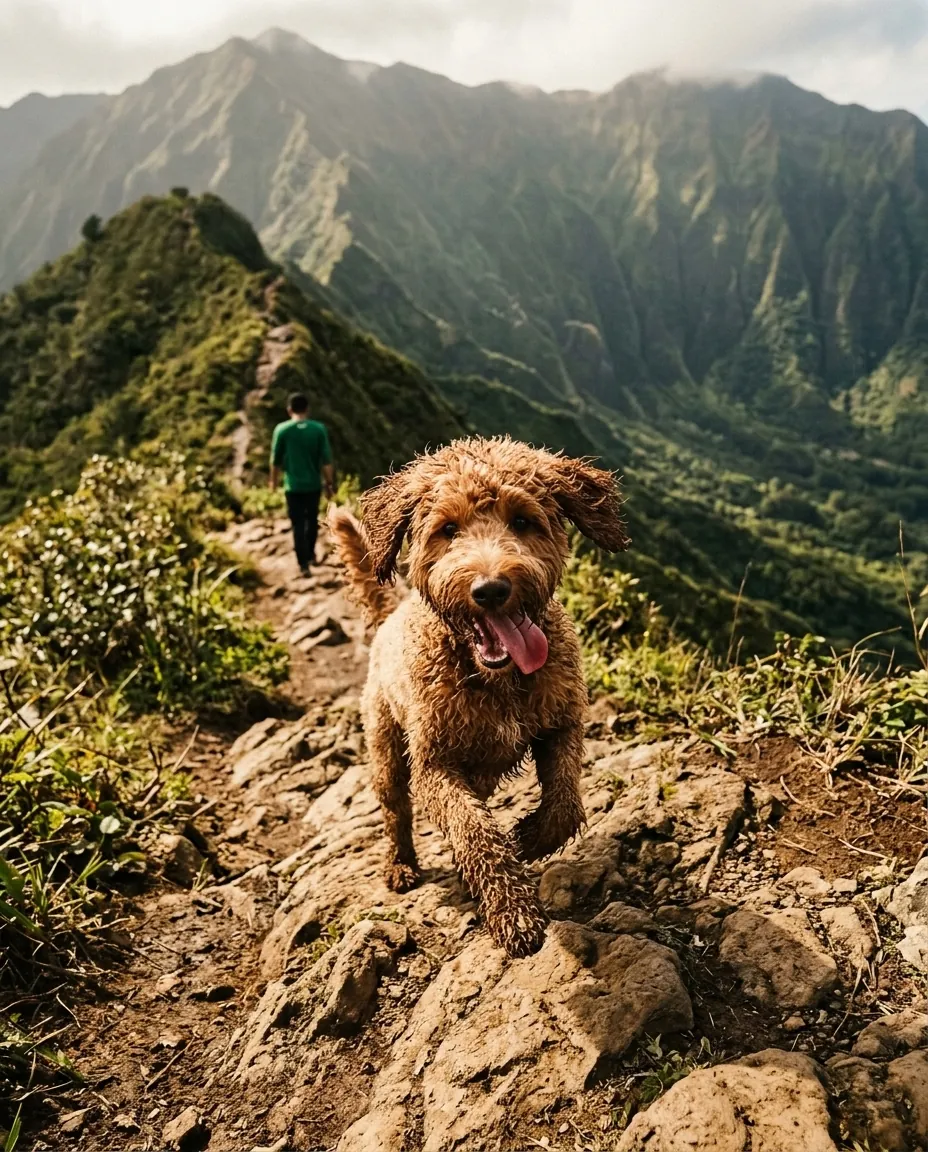
A good running dog is the best training partner there is: never checks his phone, never cancels, openly delighted by hill repeats. But dogs do not arrive run-fit any more than people do, and because he will run himself into the ground before he complains, the pacing judgement is entirely yours. Build him like the athlete he is and you get years of it.
before the first run
- Age gate, non-negotiable. Young dogs' growth plates need to close before repetitive road miles are safe, roughly twelve months for small breeds and up to eighteen months or more for large ones. Until then: walks, play, sniffing. Distance running on a growing skeleton is how lifelong joint problems start. If in doubt, this is a one-question vet call.
- Breed reality check. Flat-faced breeds (pugs, bulldogs and friends) are not distance runners and cannot cool themselves at pace; heavy giants and dogs with joint issues need the gentle version too. Ask the vet if unsure. Most spaniels, collies, pointers and mongrels, meanwhile, were born for this.
- Kit. A fixed-length lead on a waist belt beats a hand-held one, and a well-fitted harness beats a collar for running full stop. Retractable leads have ended more runs than rain.
building up: couch to 5k, but hairier
Start with a couple of kilometres of run-walk and add distance by around ten percent a week, exactly as you would for yourself. Watch him, not the app: lagging behind, heavy panting early, or lying down mid-route means the session is over, and next time is shorter. Two or three runs a week with rest days between beats daily miles, especially early. And let him have a sniff-stop or two; it is his run as well.
paws, surfaces, heat
His shoes are his feet, so check pads before and after: cracks, wear, grit between the toes. Trails and grass are kinder than tarmac; build road miles especially gradually because pads condition like skin, not like trainers. Heat is the big one. Dogs overheat before runners do, so in warm weather run at dawn, cut the distance, carry water, and use the tarmac test: if the back of your hand cannot sit on the ground for five seconds, it is too hot for his pads, and probably too hot for the run. Heavy drooling, staggering or glassy eyes mean stop, shade, water, and a vet if he does not bounce back within minutes. Full warm-weather rules are in the hot-weather guide.
the post-run routine
Cool-down walk for the last few minutes, water in sips rather than a tank (big gulping sessions straight after hard exercise are worth avoiding, particularly in deep-chested breeds), then the standard cleanup: paws, a wipe-down if the route was muddy, and a proper dry if it rained or he swam. A running dog is a sweaty-adjacent dog, and the weekly routine keeps the smell from compounding. Then he sleeps like a stone and so, oddly, do you.
scruffyboy makes the post-run cleanup kit for the boot and the hallway. Join the list for first dibs, or read the other guides.
grooming goods for dirty dogs.
Quick-clean products for the stretch between grooms, in final testing now, launching autumn 2026. The first 500 on the list get founder pricing.
get first dibs